How I Use AI to Turn My Book Highlights Into Book Notes
I don't ask AI to summarise entire books. I feed it only my highlights — what I found worth keeping — and let it build a structured reference I can use later. Here is my exact process.
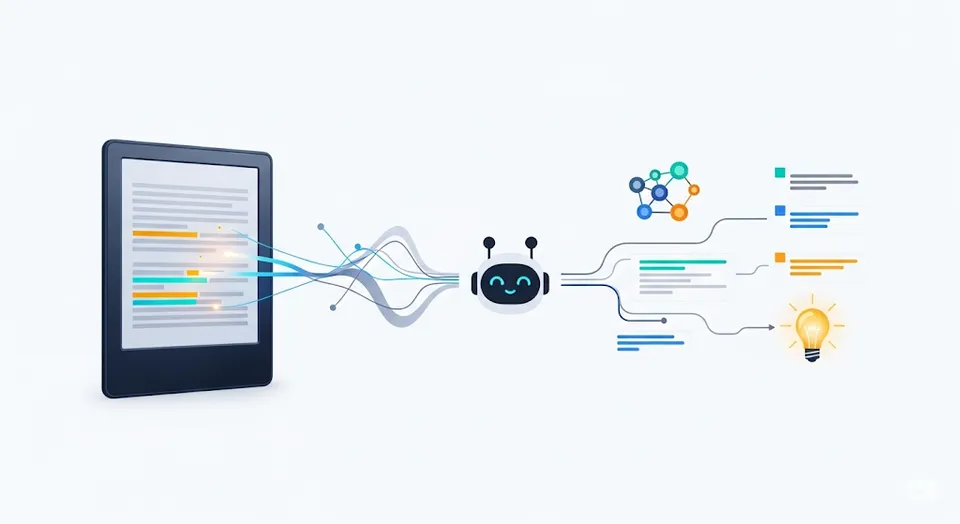
When I ask AI to summarise a book, it tells me what the book says. That is not what I need. I need to know what I found worth keeping — and why. So I stopped asking AI to summarise books. I started feeding it my own highlights instead.
This distinction matters more than it sounds.
I read the entire book first, mostly on Kindle, and highlight as I go. Not every quote that sounds smart. Only the ones that stop me. I add my own thoughts inline — half-formed reactions, disagreements, questions. When I finish the book, I go back through every highlight and clean it up. I remove the ones that felt important in the moment but say nothing on second read. I add context to the ones that need it. By the time this is done, the highlights are no longer the author’s book. They are my record of what the book did to my thinking.
All of this goes into my Obsidian vault. Kindle highlights come in automatically through a plugin. Physical book notes I type in directly with page references. The vault is not an archive. It is a working reference. I can pull up any idea later without reopening the book.
Then I run it through Claude or Gemini with a prompt I built over time. The prompt asks the AI to identify the major themes running through my highlights, not the book’s themes — mine. It builds a structured essay: an introduction, a body, the ideas I found useful, an action plan, and reflection questions. The AI works only with what I share. No external information, no outside context, no generic summary of the book.
This is the part that most AI-powered reading workflows miss. When you ask AI to summarise a book, the AI decides what matters. When you feed it your highlights, you already made that decision. The AI is just organising what you found. That is a completely different output.
Publishing sharpens this further. When I write knowing someone else will read it, I add the context I would otherwise skip. The thinking tightens. The gaps become visible.
I do not share the raw highlights because of copyright. But the process above is the full picture.