When AI Got Too Good
My AI content ranked but generated zero leads. One brief change later: Rs 7 lakh last quarter. Here is what changed.

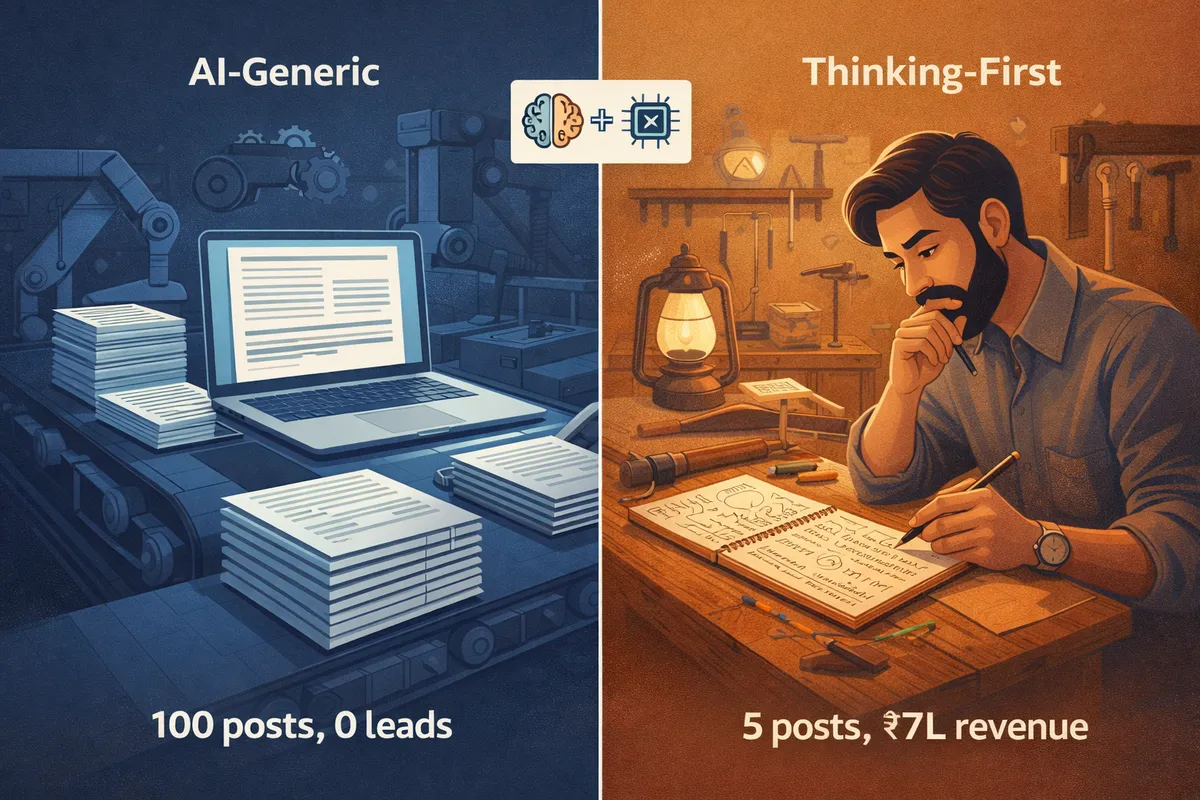
I gave AI the wrong job for two years.
Not the wrong tool. The wrong brief.
In 2024, my brief was simple: take this post, optimise it for SEO, make it rank. I shared business context, built a prompt, gave AI the role of an SEO analyst. It did exactly what I asked. Google agreed. Five posts drove 90% of my site traffic. One hundred posts published.
Zero business leads.
In 2025, I changed two things together — and both were required. I stopped asking what Google wanted to see. And I stopped asking AI to think about my reader. I did that part myself first. Three questions before AI touched anything: what does this person already know when they land here, what are they trying to decide, and what do they need from me to make that decision.
Same posts. Same topics. Same AI. Different brief. Different intent.
Last quarter those five posts generated Rs 7 lakh in revenue.
The posts did not get longer or more comprehensive. They got shorter. The 2024 version of “Cost of Hiring a Security Guard in India” covered everything — base salary, ESI, PF, uniform costs, training fees, regional variations, vendor markups. Two thousand five hundred words. Thorough. Forgettable.
The 2025 version answered one question: what will you actually pay per guard per month in your city, and when does hiring an agency make more sense than direct employment. Shorter. My voice. My operational memory in it.
People started calling.
Ranking and deciding are different outcomes. A post optimised to rank answers the question Google expects on that topic. A post optimised to help someone decide answers the question they are carrying in their head.
At 11pm when something has gone wrong.
That is the reader I was not writing for. AI had no access to what I know from running operations — what a finance head actually asks before signing a security contract, what the hidden costs are that no vendor will tell you upfront, what a client is genuinely worried about. That operational memory cannot be prompted in. It has to come from me before AI touches anything. Early research points in this direction too, though the evidence is still thin.
A friend showed me his business proposal in January 2025, written entirely with ChatGPT. Polished. Professional. When I asked about why this pricing model made sense for this idea, he fumbled. The AI had done such a thorough job that he had never needed to think it through himself. I recognised it immediately. I had been doing the same thing with my blog — letting AI’s thoroughness substitute for my thinking rather than sharpen it.
I publish less now. Around four posts a month instead of eight to ten. Each takes one to two hours instead of twenty minutes. My posts get five hundred to six hundred views where AI-generic posts on LinkedIn get ten thousand. The metric I track is whether someone read a post and called us. That happened eleven times last quarter. Twelve months ago it happened zero times.
The brief is everything. Get it wrong and AI executes the wrong thing perfectly. Get it right and it helps you say clearly what you already know.
Here is the prompt I now use at the start of every AI session.
“Respond as a Socratic teacher. Guide me through questions and reasoning. Avoid direct answers. Ask questions that make me discover the insight myself. Be direct — if I am wrong, say so. Do not agree to make me comfortable. Play devil’s advocate when my argument needs pressure-testing. Use plain, simple English throughout.”
It will feel slower than asking AI for an answer. That is because you are doing the thinking now. The more real business problems you bring to it, the sharper it gets.