
Why is USD the preferred currency for trade
A brief explanation on why is USD the preferred currency for trade and why liquidity matters when a country has trade deficit

Kiran Brahma
Founder, Knighthood
In the past few days, quite a few posts popped up in my LinkedIn feed on why India should stop using USD for trading with other BRICS nations. A few made the argument that BRICS should build its own interoperable payment system (similar to UPI) that frees us from the tyranny of the USD.
A few arguments did look convincing, but it got me curious: why is USD the preferred currency for trade?
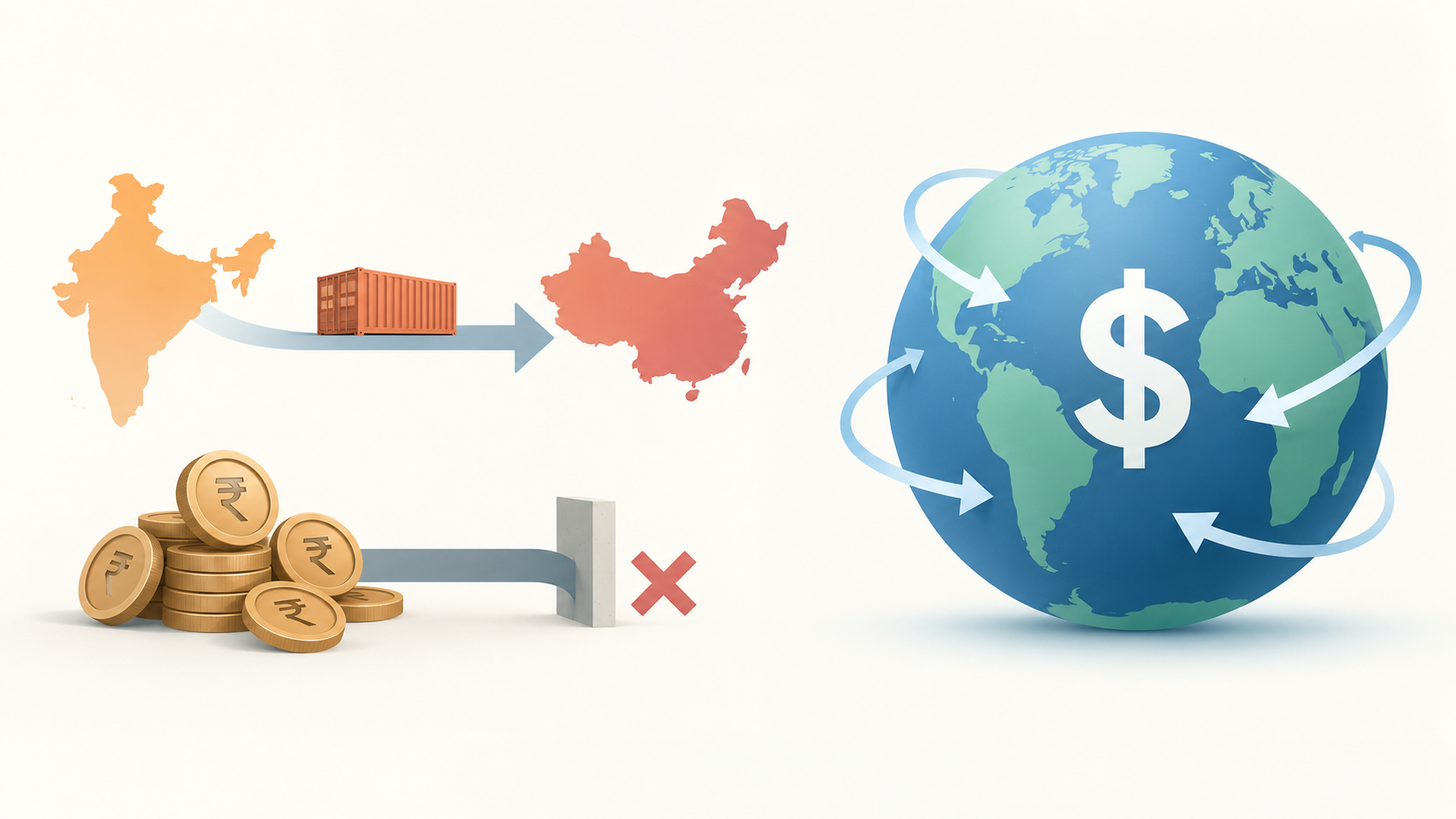
Currency on its own has little value. Its real value is allowing us to buy goods or services, invest, lend, or exchange it for another currency.In FY 2025-26, India imported around $132 billion of goods from China, but exported just around $19.5 billion. So, India had a trade deficit of around $112.5 billion.
Now if India pays China in rupees, not USD. China can use some of those rupees to buy Indian goods. However, due to the size of the trade imbalance, China will be left holding a large amount of rupees. China can either invest this excess money in Indian assets or businesses (not easy due to India's current restrictions on Chinese investment) or convert the rupees into yuan or another currency.
Now such conversions are not that easy. Someone has to be willing to take those rupees, pay China in yuan or another currency, and then hold or use the rupees themselves.
This is why USD wins.
Banks, companies, investors and even countries across the world are willing to hold dollars. If India pays China in USD, China can use those dollars to buy US bonds or shares, buy global assets, lend them, or simply purchase goods from other countries.
So even if BRICS nations did develop an interoperable system, allowing member nations to trade more in their local currencies, it does not solve the problem caused due to trade imbalances. Someone needs to hold onto the excess currency. Until this is not resolved, it won't be easy to walk away from USD.