The Question That Disappeared: From Evaluating Stay-or-Leave to Engineering Freedom
From Reliance Jio to Ola to my own business: how I evolved from evaluating stay-or-leave decisions to structuring a business where I control the exit.

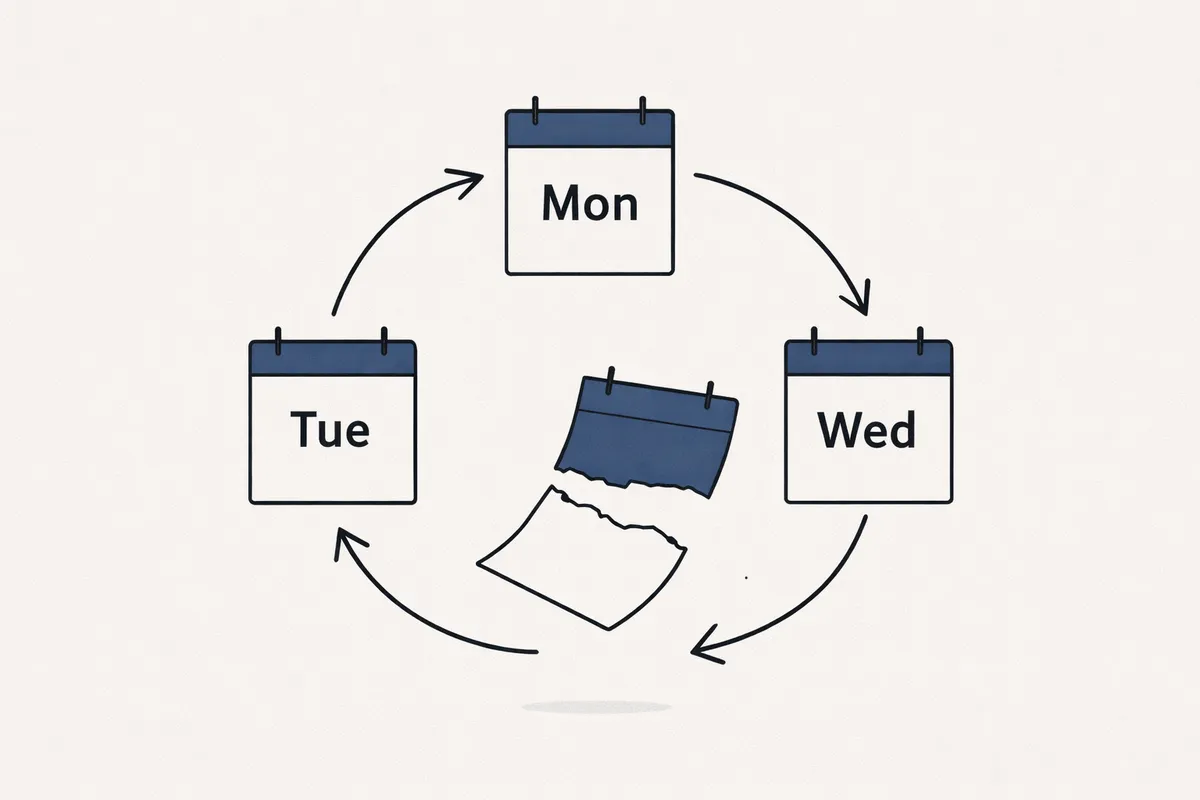
I spent Monday and Tuesday building a 150 slide deck. Wednesday, reviewing them with my manager and his team. Thursday starting real work. Then Monday arrived again.
My analyst told me he’d become an Excel expert, not an analyst.
The Question I Learned to Ask
The question wasn’t always there. When I jumped from Reliance Jio to TaxiForSure in 2014, I asked different things:
- Can I learn something new?
- Will I get more responsibility?
- Is the 1.6x pay worth trading stability for risk?
- Will I work with smart people?
The risk calculation was simple. I had one month’s expenses saved. The company just raised funding, so no salary risk for 6-7 months. I’d be on the road every day—hotels and meals reimbursed—so I could save 100% of my salary.
Worst case: 3 months jobless. I was confident I’d find another job in 2 months.
My dad had just quit his corporate job to start his business. I had ₹15 lakh in ISB loans. But he had savings and told me not to worry.
I had one data point: an ISB peer I trusted who worked there. You can’t always have perfect information. You look at what’s available and decide.
A New Question Emerged
Around two years into my startup life—one year into Ola after the TaxiForSure acquisition—a different question started appearing:
Would I stay even if this fails?
Ola was moving from pure growth to growth plus profitability. The chaos was still there, but now we were building systems. I was a Regional Business Head covering 21 cities. The work was hard. The pressure was real. But I loved what I was doing and worked with great people.
The answer was yes. But underneaths, things were shifting.
The Slow Bleed
As Ola grew, more seasoned professionals joined. Internal politics started.
Then the bureaucratic systems arrived—without removing the chaos. We retained the chaos and added the system layer.
I spent Monday and Tuesday building 150-slide decks for weekly business reviews. Wednesday was the review—all business heads had to attend. The meeting was a drag for everyone who attended.
The analytics team built queries and scripts to populate data for the 150 slide deck. But I still had to review everything, add in my comments and include additional slides that I wanted to present. Even managers covering single major cities like Mumbai had the same 150+ deck template.
Then monthly business reviews started—taking the last two days of every month. Then quarterly planning—three weeks building even more elaborate slide decks.
My analyst became an PPT/Excel expert.
Two of my peers—business heads—quit. Two of my team members left because of the new systems.
The signs changed. The answer was moving toward no.
I started looking for another job. Once I had a new role lined up—which turned out to be a bad decision—I took two weeks off to travel and think. Then I quit.
What I Built After
After five years running Knighthood, I realized something: I’d structured my business so I never have to ask that question again.
The principles I follow:
Independence is the Only Asset
- Goal: Happiness
- I define “enough” by my ability to say “no,” not by zeros in my bank account
Always:
- Maintain 6-month cash reserve
- Keep margins high enough to lose any single client without panic
Never:
- Accept debt that removes my ability to walk away
- Optimize for revenue if it decreases decision freedom
I learned these by almost breaking.
Two months after my father’s death, one of my best clients—representing 11.5% of revenue and 20% of profit—threatened termination. They had excellent payment terms: cash within 2 days. Their brand name helped me land other customers. Operationally, they were exactly the kind of client I wanted.
But I panicked.
I spent 2 hours daily for a month fixing their issues. Not because they were a bad client, but because I couldn’t afford to lose them. I didn’t have enough buffer, enough clients, or enough emotional stability to absorb the hit.
I got lucky—no other clients had issues during the transition. If they had, I would have collapsed.
That’s when I realized the trap wasn’t the client. The trap was building a business where I couldn’t afford to lose ANY client without panic.
Revenue that forces you to say “yes” isn’t revenue. It’s dependency disguised as growth.
What I’m Still Watching
I don’t know if this framework holds forever. Businesses change. My definition of “enough” might shift.
But I’m not asking “Would I stay even if this fails?” anymore.
I’ve engineered the business so the question doesn’t apply. I can walk away from any client, any deal, any situation that violates my principles.
That’s the real difference between evaluating stay-or-leave decisions and building something where the question disappears.