The Tasmanian Chain: Why Your Business Is Losing Institutional Memory
My new hire learned billing in two days. I celebrated. Then I realized he had no idea what three people and a full week used to look like. When institutional memory breaks, AI doesn't fix it—it accelerates through the gaps.

AI Doesn’t Break Things. It Finds What’s Already Broken.
My new hire picked up billing in two days. I thought that was a win. Then I realised he had no idea what three people and a full week used to look like. That’s not efficiency. That’s amnesia.
And amnesia is exactly what makes AI dangerous.
AI doesn’t create fragile systems. It finds them before you can compensate. When institutional memory is gone, nobody knows which parts of the operation are load-bearing. When AI speeds up the flow, the weak joints crack first. Not gradually. Suddenly.
Most businesses are more fragile than they think. Not because they didn’t improve. Because the people who remember the improvement are gone.
What Billing Used to Cost
Five years ago: three people, a full week, attendance data scattered across WhatsApp threads, Excel sheets, and paper registers. Each invoice took ten minutes to prepare by hand. The process started on the 26th. Payments went out by the 7th — if we were lucky. Five to ten per cent of bills had errors. Corrections meant delays. Delays meant complaints.
Today: same three people, two to three intense days. Zoho Books generates invoices in two to three minutes. Across 150–250 invoices monthly, that compounds fast. Payroll errors down to one or two per month. Billing corrections down to two or three per quarter.
It took two years to get here. ₹2.5 lakh upfront for payroll software alone. Seven months of migration resistance I didn’t expect.
The people who did that work are gone. They took the mess with them. The new hires only see the polish.
The Problem With Polish
Today, apart from my Ops manager and myself, nobody in my office knows what the old system cost. The current HR, payroll, and billing staff inherited a working system. To them, this is simply how things work. Not a hard-won improvement. Just the baseline.
When one person recently quit and a colleague absorbed the additional work, he said the load was intense. I explained that eighty per cent of billing is now just updating two or three values and processing. He understood. It didn’t change how the current load felt.
Memory doesn’t stop the new normal from feeling painful. The threshold shifts regardless of what people remember.
This is the problem institutional memory alone cannot solve. My Ops manager and I carry the full history of a two-year migration — one thousand guards, forty-five cities, ₹1.5 crore monthly operations. If he leaves, the custom logic for our 45-city compliance grid becomes a black box. Nobody else will know which rules are statutory and which are workarounds we built. The system keeps running until it hits an exception it wasn’t designed for. Then it doesn’t just fail. It fails in ways nobody can explain.
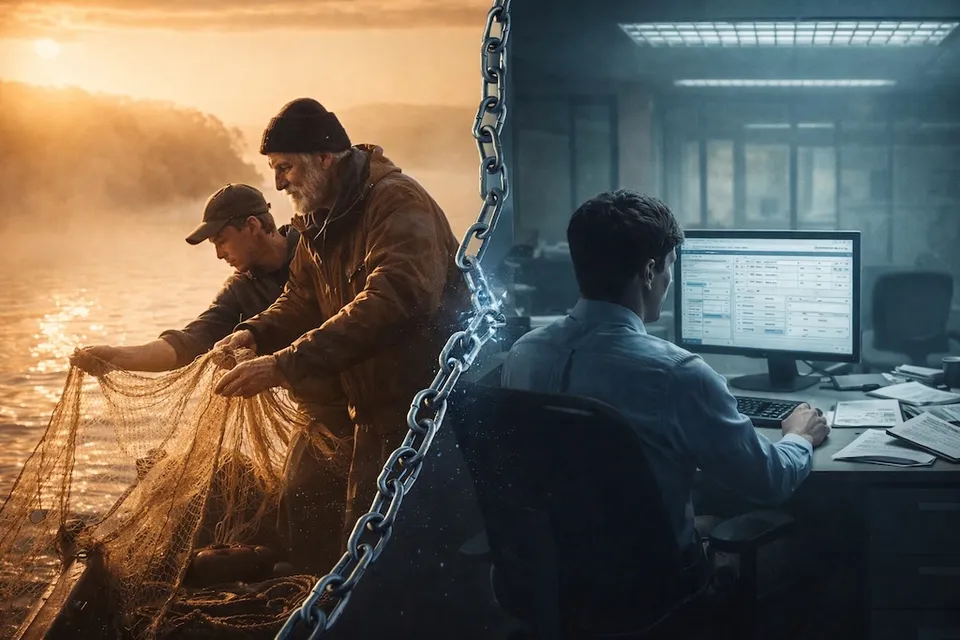
There’s a sharp historical parallel. After the last ice age, rising seas cut Tasmania off from mainland Australia. Over seven thousand years, one generation stopped fishing. Not laziness. The person who knew the technique died before passing it on. The oral chain broke once. That was enough. When European settlers arrived eating fish, the locals avoided it completely. Seven millennia of knowledge gone from a single gap in transmission.
We are the last Tasmanians who remember fishing.
The One Question
Before AI touches any workflow, ask one person on your team a simple question: what did this process look like three years ago?
If they know — good. That’s a start. But then ask the harder question: if that person leaves tomorrow, who else knows?
Memory held by one person isn’t institutional memory. It’s a single point of failure.
AI will find your weakest system. Memory without transfer is just a slower version of forgetting.
The only protection is deliberate transfer. That work has no dashboard, no monthly report, no celebration. But without it, you’re not adopting AI into a stable operation. You’re putting a power winch on rotting rope.
Start with one process this week. Write two numbers: what it cost in time before the system, and what it costs now. Keep it somewhere the next person will find it.
That’s your chain. Maintain it deliberately, or watch it break quietly.