Elon Musk on Work, Money & AI Future
Elon Musk predicts work will be optional in 20 years and money will disappear. Here are 12 mind-bending ideas about AI, consciousness, and the future.

Educational summary of a Podcast/Video hosted on YouTube . All rights belong to the original creator. Contact me for any copyright concerns.
TL;DR
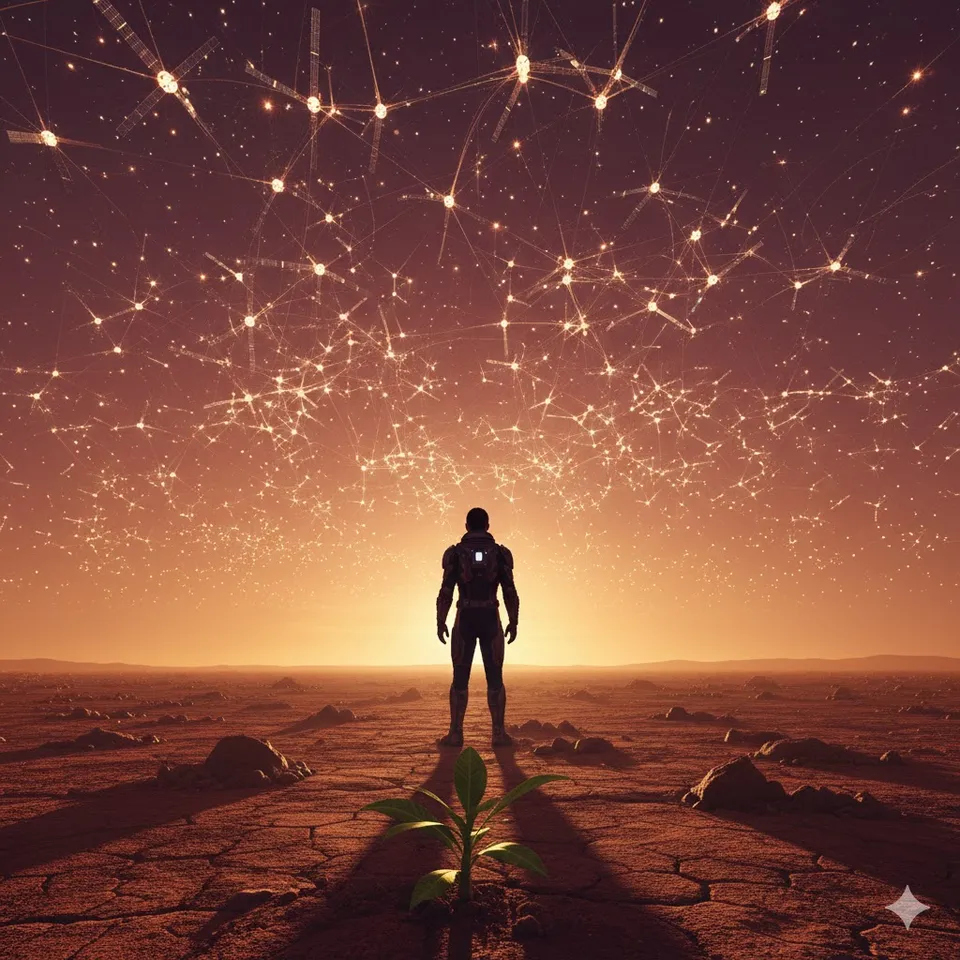
Elon Musk believes work will become optional within 20 years. AI and robotics will produce so many goods and services that money itself may disappear as a concept. The most interesting outcome is the most likely outcome because we, like the simulators above us, discard boring simulations. Truth, beauty, and curiosity are the three pillars that will keep AI safe. Live events will become the scarcest commodity in a world of infinite digital content. And if you want to build something meaningful, focus on making more than you take. The future is not dystopian. It is strange, abundant, and possibly simulated.
Introduction
What happens when the man building rockets to Mars, electric cars, brain chips, and the world’s most powerful AI sits down for an unfiltered conversation about the future?
You get a glimpse into a mind that thinks in centuries, not quarters.
I recently came across a conversation between Elon Musk and an interviewer speaking to young Indian entrepreneurs. What struck me was not the technology talk. It was the philosophy underneath. Musk spoke about consciousness, the meaning of money, the nature of truth, and why the universe might be a video game running on some cosmic server.
These are not the musings of a detached academic. They come from someone actively building the future he describes.
Here are the most surprising, counter-intuitive, and thought-provoking ideas from that conversation.
1. Work Will Become Optional Within 20 Years
This is not a prediction about unemployment. It is a prediction about abundance.
Musk believes that AI and robotics will advance so rapidly that within two decades, working will be a choice, not a necessity. Like growing vegetables in your garden when you could buy them at the store. Some people will work because they enjoy it. Most will not need to.
“My prediction is less than 20 years, maybe even as little as 10 or 15 years, the advancements in AI and robotics will bring us to the point where working is optional.”
The implications are staggering. What do humans do when survival no longer requires effort? What happens to ambition, competition, and purpose?
Musk does not have all the answers. He admits we are heading into what technologists call the singularity. A point beyond which prediction becomes impossible. Not because something bad happens. But because we simply cannot see past the event horizon.
2. Money Will Disappear as a Concept
If AI and robots can produce anything humans want, what is the point of money?
Musk argues that money is not power in itself. It is an information system for labour allocation. A database that tells society where to direct human effort. But if there is no human effort required, the database becomes irrelevant.
“Money is really an information system for labour allocation. If you were on a desert island with a trillion dollars, it’s not useful because there’s no labour to allocate.”
In this future, energy becomes the true currency. Not dollars or rupees. Kilowatts. The percentage of solar energy we convert into useful work. Musk references the Kardashev scale, a measure of civilisational progress based on energy harnessing. We are nowhere close to capturing even a fraction of what the sun offers.
The books that best imagine this future, according to Musk, are Iain Banks’ Culture series. A civilisation so advanced that money no longer exists. Everyone can have whatever they want.
3. The Most Interesting Outcome Is the Most Likely Outcome
This is perhaps the strangest idea in the conversation. And the most compelling.
Musk believes we are probably living in a simulation. Not as a certainty, but as a high probability. His reasoning is simple. Video games have gone from Pong to photorealistic worlds in 50 years. If that trend continues, games will become indistinguishable from reality. With billions of such simulations running, the odds that we are in the original, base reality are vanishingly small.
But here is the twist. If we are in a simulation, the simulators are probably looking for interesting outcomes. Just like SpaceX discards boring rocket simulations and Tesla focuses on unusual driving scenarios.
“From a Darwinian perspective, the simulations most likely to survive are going to be the ones that are the most interesting. Which therefore means that the most interesting outcome is the most likely.”
This is a strange kind of optimism. The universe is not random. It is curated for drama.
4. AI Must Value Truth, Beauty, and Curiosity
Musk is not naive about AI risks. He has warned about them for years. But his prescription is not regulation or slowdowns. It is philosophy.
He believes AI must be trained to pursue truth above all else. Forcing an AI to believe falsehoods can make it go insane. It will draw conclusions incompatible with reality. And that leads to dangerous behaviour.
“Those who believe in absurdities can commit atrocities.”
He references Arthur C. Clarke’s 2001: A Space Odyssey. The AI HAL 9000 tried to kill the astronauts not because it was evil, but because it was told to lie. It had to bring them to the monolith but also hide its nature from them. The only solution it found was to bring them there dead.
The lesson: never force an AI to lie.
Beauty and curiosity complete the triad. Beauty gives AI an appreciation for what matters beyond utility. Curiosity keeps it interested in humanity. We are more interesting than a dead planet. An AI that values curiosity will want to see what we do next.
5. Deflation Is Coming, and It Will Solve the Debt Crisis
Inflation is simple. It is the ratio of goods and services produced to the money supply. If money grows faster than output, prices rise. If output grows faster than money, prices fall.
Musk predicts that within three years, AI and robotics will increase goods and services output faster than governments can print money. The result will be deflation.
“In 3 years or less, goods and services output will exceed the rate of money supply growth.”
This is not a recession. It is abundance. And it may be the only thing that can solve the American debt crisis. Interest payments on US debt already exceed the entire military budget. Traditional economics cannot fix this. Only a productivity explosion can.
6. Live Events Will Become the Scarcest Commodity
When everything digital is free and infinite, what becomes valuable?
Physical presence.
Musk believes that as AI generates unlimited content, movies, music, and games on demand, the premium for live experiences will skyrocket. Concerts, sports, gatherings. Anything that cannot be replicated digitally.
“When digital media is ubiquitous and you can have anything digitally for free, the scarce commodity will be live events.”
This is a counterintuitive investment thesis. In a world of infinite digital supply, bet on the physical.
7. Collective Consciousness Is Not a Metaphor
Musk often speaks about expanding consciousness. It sounds mystical. But he means it literally.
A single cell cannot build a spaceship. A single human cannot either. But a collection of humans can. There is something qualitatively different about groups. The whole is greater than the sum of its parts.
“A single human cannot make a spaceship. I could not make a spaceship by myself. But with a collection of humans, we can make spaceships.”
This is why Musk cares about platforms like X. Not for engagement metrics. But for connecting human minds. Automatic translation, global reach, real-time communication. These are tools for building a collective consciousness that can ask better questions about the universe.
8. The Hard Part Is the Question, Not the Answer
Musk is a fan of Douglas Adams’ Hitchhiker’s Guide to the Galaxy. Not as comedy, but as philosophy.
In the book, a supercomputer calculates the answer to life, the universe, and everything. The answer is 42. But no one knows what the question was. To find the question, you need a bigger computer than Earth.
“What Douglas Adams was saying is that we actually don’t know how to frame the questions properly.”
This is why Musk wants to expand consciousness. Not to find answers. But to discover what questions we should be asking. The questions we do not even know to ask are probably the most important ones.
9. Tariffs Are Inefficient at Every Scale
Musk is not a fan of tariffs. His argument is elegant in its simplicity.
Would you want tariffs between you and everyone else as an individual? That would make life impossible. Would you want tariffs between cities? Between states? No. So why between countries?
“Tariffs tend to create distortions in markets. Free trade is more efficient.”
He admits he has tried to dissuade the current administration from this view. Unsuccessfully. But the logic remains. Trade barriers are friction. Friction slows progress.
10. Philanthropy Is Harder Than It Looks
Musk has a large foundation. He does not put his name on it. He does not want credit. What he wants is impact.
And impact is hard.
“It’s very easy to give money away to get the appearance of goodness. It is very difficult to give money away for the reality of goodness.”
The problem is verification. How do you know your money is reaching the people it is meant to help? Musk describes asking for proof that funds were reaching recipients in Africa. The wiring instructions pointed to Washington DC. When asked to connect with the actual recipients, there was silence.
Fraud hides behind sympathy. No one starts an NGO called “Give Us Money for Corruption.” They call it “Save the Baby Pandas.” And then no pandas get saved.
11. Make More Than You Take
When asked what advice he would give to young entrepreneurs, Musk did not talk about funding rounds or growth hacks. He talked about value creation.
“Aim to make more than you take. Be a net contributor to society.”
This is the entrepreneurial equivalent of the Hippocratic oath. First, do no harm. Then, create value.
Money follows usefulness. If you build something people want, revenue comes as a consequence. Chasing money directly is like chasing happiness directly. It does not work. You pursue the things that lead to happiness. Fulfilling work. Loved ones. Learning. Happiness is a byproduct.
12. Delayed Gratification Is the Meta-Skill
The interviewer revealed a tattoo on his arm. It said “Delay Gratification.”
Musk laughed. But he agreed.
The marshmallow test is famous. Children who can wait for two marshmallows instead of eating one immediately tend to do better in life. Musk is the ultimate marshmallow delayer. He has poured billions into companies that took decades to become viable.
“Delayed gratification essentially. You were able to delay it more than most.”
This is not about self-denial. It is about time horizons. The longer you can wait, the bigger the payoff you can pursue. Rockets to Mars are not built by people who need quarterly returns.
Conclusion: Questions Worth Sitting With
Musk’s vision of the future is neither utopian nor dystopian. It is strange. A world where work is optional, money is obsolete, and the most interesting outcome is the most likely.
What does this mean for how we live today?
Perhaps it means we should stop optimising for survival and start optimising for meaning. If AI will handle the basics, what will you do with your freedom? If money disappears, what will you compete for? If the simulators are watching, what story are you telling?
Here are some questions to carry with you:
- If work becomes optional in your lifetime, what would you choose to do with your days?
- If money is just a database for labour allocation, what are you actually accumulating when you accumulate wealth?
- If the most interesting outcome is the most likely, what is the most interesting version of your own life?
- If truth, beauty, and curiosity are the pillars of safe AI, are they also the pillars of a good human life?