The Hidden Blueprint Behind Every Billion-Dollar Startup: How to Engineer Digital Disruption
Learn how to identify "weak links" in the customer value chain to steal customers from big incumbents by reducing money, time, and effort.

Educational summary of a Podcast/Video hosted on YouTube . All rights belong to the original creator. Contact me for any copyright concerns.
TL;DR
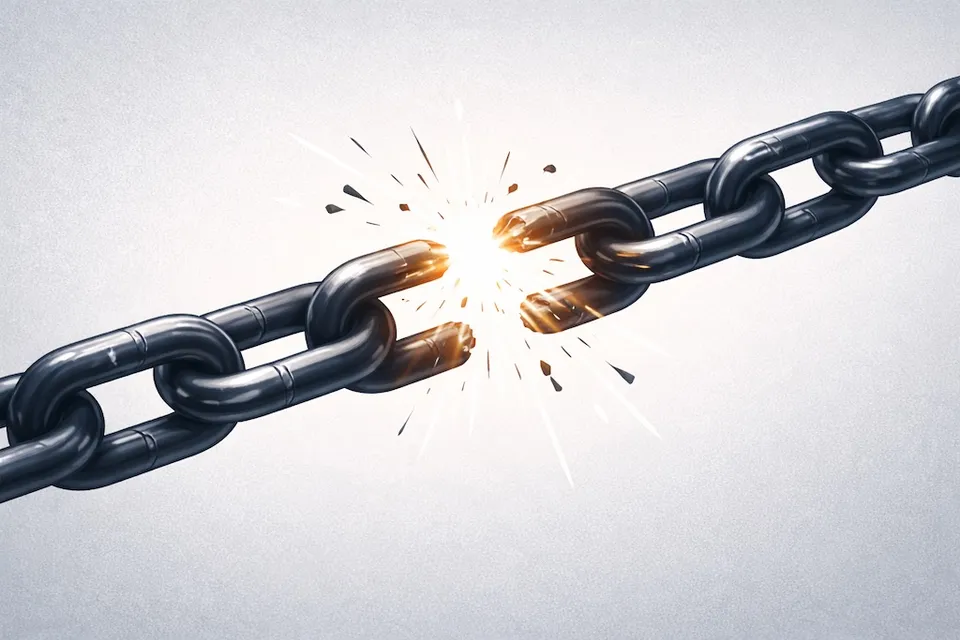
Digital disruption is not about technology; it is about breaking the customer value chain. By identifying and “decoupling” a single activity that customers find expensive, slow, or high-effort, an entrepreneur can steal customers from established incumbents. Once a foothold is established, growth comes from “coupling” adjacent activities. For an entrepreneur, this is a framework for identifying which specific operational link to break with AI or better systems.
The Customer Value Chain as an Engineering Tool
Most operators follow intuition when starting a new project. Instead, Teixeira suggests mapping the Customer Value Chain (CVC)—the series of activities customers must perform to acquire, use, and dispose of a product. Every activity falls into one of three buckets:
- Value-creating (what the customer actually wants)
- Value-capturing (how the business gets paid)
- Value-eroding (necessary chores like travel or paperwork). Disruption happens when you isolate the value-creating part and let the customer skip the eroding parts.
For example, Twitch decoupled the value-creating act of watching someone play a game from the eroding act of having to play it yourself.
**Operational Step: **Map every step of your current service and identify which 80% is actually “eroding” for your client.
Identifying the Weakest Link
The best opportunity to disrupt a market is the activity where customers are most unsatisfied. This “weak link” is usually characterized by high costs in money, time, or effort. In the insurance industry, comparing policies is the weak link because it requires immense effort and time.
Insurtech startups stole customers by focusing solely on that comparison phase. An entrepreneur does not need a better product than the incumbent; they just need to solve the one specific activity that makes the customer lose sleep.
Operational Step: Find the one stage in your industry where the “effort-to-reward” ratio is broken and build your system there.
Preempting the Incumbent Response
Decoupling is effective because incumbents often cannot respond without destroying their own business models. PillPack decoupled the organization of medication from the act of buying it. Traditional pharmacies could have copied the model, but they did not because their business depends on foot traffic—getting people in the door to buy high-margin impulse items.
Sending pills directly to homes would have killed their primary value-capture engine. When choosing a niche, look for a “weak link” that the big players are incentivized to ignore. This creates a structural moat that allows a lean operator to grow without immediate competitive pressure.
**Operational Step: **Understand what small feature of your competitor can you decouple that gives you an unfair advantage
Scaling Through Coupling
Once you have decoupled a specific activity and captured the customer, the next stage is coupling. This is the process of adding adjacent activities in the CVC to expand the business. Uber started by decoupling the “matchmaking” of riders and drivers. Once they owned that link, they coupled it with food delivery (Uber Eats) and package delivery. They grew outwards by stealing more activities from established players.
Operational Step: Start with one sharp, narrow service and only add related tasks once the first link is profitable and systemised.
AI as a Tool for Reducing Friction
Generative AI is a general-purpose tool that creates value only if it makes an activity cheaper, faster, or easier. Many founders use AI for “content tricks” that create little actual value for the customer.
The correct application of AI is to target an activity where customers are currently paying “excess costs” in time or effort. If your AI implementation does not tangibly reduce the friction of an eroding activity, it is likely just a fad. Evaluate your current AI experiments by asking if they are actually reducing the time-to-value for your customers
Questions to Consider
- What are the specific “value-eroding” steps in my customer’s journey that I can automate or remove?
- Is the “weak link” I am targeting something the incumbent is structurally unable to fix without hurting their main revenue?
- Does my current use of AI reduce the cost of money, time, or effort for the end-user by a measurable percentage?
- What is the single adjacent activity I will “couple” once my initial decoupled service reaches profitability?
Quotes
- “Disruption or creating a high-growth startup can be engineered; it can be designed.”
- “Decoupling is the breaking of the links of the customer value chain often by a digital player.”
- “There is no fundamental rule of business that says if you provide value to customers you get a chance to capture value to be profitable.”
- “The weakest link is the moment in the process of purchasing something that customers are most unsatisfied.”
- “If your AI implementation does not tangibly reduce the friction of an eroding activity, it is likely just a fad.”